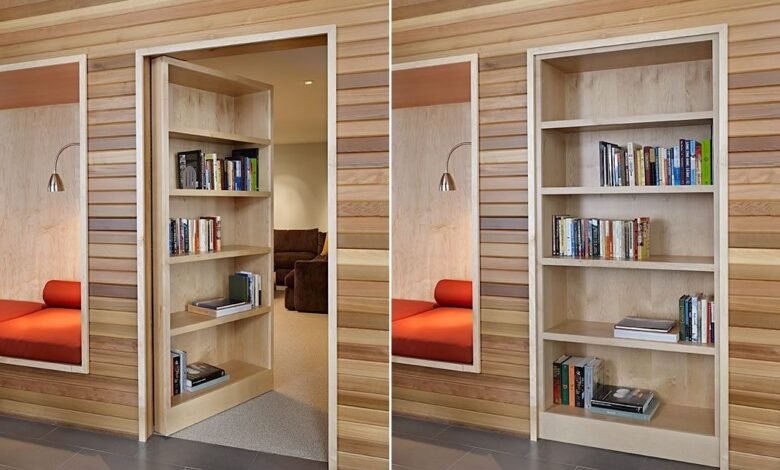
Introduction to Murphy Doors
Murphy doors are more than just a design trend—they represent a clever blend of practicality, creativity, and space-saving innovation. Whether you want to hide a room, maximize storage, or simply add a unique architectural feature to your home, Murphy doors deliver both style and function.
This guide breaks everything down in a clear, easy-to-read way. You’ll learn what Murphy doors are, how they work, why they’re popular, and how to choose the right one for your space.
What Are Murphy Doors?
Murphy doors are hidden doors that are built into functional furniture, most commonly bookshelves. When closed, they look like a regular piece of furniture. When opened, they reveal a doorway behind them. This design allows you to conceal rooms in a seamless and stylish way.
The concept is simple but powerful. Instead of using a traditional door, you integrate the entryway into something useful. A bookshelf, cabinet, or even a pantry unit can double as a door. This dual-purpose design makes Murphy doors especially appealing in modern homes where space efficiency matters.
Murphy doors are often confused with secret doors, but they are more practical and accessible. While secret doors were historically used for hidden passageways, Murphy door are designed for everyday use. You can install them in bedrooms, offices, basements, or even bathrooms without compromising usability.
Another key aspect is customization. Murphy doors come in various styles, sizes, and finishes. Whether you prefer a rustic wooden bookshelf or a sleek modern cabinet, you can design a Murphy door that blends perfectly with your interior.
The History Behind Murphy Doors
Murphy doors are inspired by the same idea that led to the invention of the Murphy bed—a space-saving solution created to maximize small living areas. The concept gained popularity as urban homes became smaller and people needed smarter ways to use space.
Hidden doors, however, date back centuries. In castles and mansions, secret doors were used for security and privacy. These concealed passageways allowed people to escape danger or move discreetly between rooms. Over time, the idea evolved from secrecy to functionality.
In modern times, Murphy doos became popular not for hiding secrets but for enhancing design. Homeowners started using them to create clean, uncluttered interiors. By hiding doors within furniture, they could maintain a seamless look without visible interruptions in the wall.
Today, Murphy doors are widely used in both residential and commercial spaces. They have become a symbol of smart design—where aesthetics meet practicality.
How Murphy Doors Work
Murphy doors operate on a hinge system that allows the entire unit—usually a bookshelf or cabinet—to swing open like a door. Unlike traditional doors, the hinge is often concealed, which adds to the seamless appearance.
The door is mounted to the wall frame just like a regular door, but it is heavier because it includes shelving or storage. To support this weight, manufacturers use heavy-duty pivot hinges or specialized hardware. These hinges ensure smooth movement and long-term durability.
Most Murphy door open outward, but some designs allow inward opening depending on the layout of the space. The direction of the swing is important and should be planned carefully during installation.
Another important feature is balance. Since the door carries weight from books or items placed on shelves, it must be properly aligned. A well-installed Murphy door will open easily without tilting or dragging.
Some advanced designs also include locking mechanisms. These can be hidden latches or magnetic locks, making the door even more discreet. This feature is especially useful if you want to keep a room private or secure.
Types of Murphy Doors
Murphy doors come in several types, each designed to serve a different purpose. Choosing the right type depends on your needs, space, and design preferences.
Bookshelf Murphy Doors
This is the most common type. It looks like a regular bookshelf but swings open to reveal a hidden room. It’s perfect for home offices, reading rooms, or secret storage areas.
Bookshelf Murphy doors are highly customizable. You can adjust the number of shelves, the depth, and the finish to match your décor. They also provide extra storage, making them both stylish and practical.
Cabinet-Style Murphy Doors
Cabinet-style doors resemble storage units or wardrobes. These are ideal for kitchens, pantries, or utility rooms. They offer a clean and organized look while hiding access to another space.
These doors are often used in modern homes where minimalism is important. By hiding the doorway, they help maintain a streamlined appearance.
Mirror or Panel Murphy Doors
Some Murphy doors are designed to look like decorative panels or mirrors. These are great for bedrooms or dressing areas. They add a functional design element while keeping the hidden door subtle.
Mirror doors also help make a room feel larger, which is a bonus in smaller spaces.
Custom Hidden Doors
For those who want something unique, custom Murphy doors are the way to go. You can design a door that fits your exact needs, whether it’s a wine rack, display case, or even a wall-mounted entertainment unit.
Custom designs allow for creativity and personalization, making your space truly one-of-a-kind.
Benefits of Murphy Doors
Murphy doors offer several advantages that make them a popular choice among homeowners and designers.
One of the biggest benefits is space efficiency. By combining a door with storage, you eliminate the need for additional furniture. This is especially useful in small homes or apartments where every inch matters.
Another major advantage is aesthetics. Murphy doors create a clean and seamless look. Without visible doors breaking up the wall, your space appears more organized and visually appealing.
Privacy is another key benefit. Murphy doors allow you to hide rooms in plain sight. Whether it’s a home office, a safe room, or a personal retreat, you can keep it discreetly concealed.
They also add a sense of novelty and uniqueness. A hidden door can be a fun and surprising feature that impresses guests and adds character to your home.
Finally, Murphy doors can increase property value. Unique design features often make a home more attractive to buyers, especially those looking for modern and functional living spaces.
Where to Use Murphy Doors in Your Home
Murphy doors are versatile and can be used in many different areas of your home.
In living rooms, they can hide storage spaces or small offices. This helps maintain a tidy and uncluttered look while keeping essential items accessible.
In bedrooms, Murphy doors can conceal walk-in closets or private study areas. This adds both functionality and privacy without taking up extra space.
Kitchens are another great place for Murphy doors. You can use them to hide pantries or utility rooms, creating a sleek and modern appearance.
Basements often benefit from Murphy doors as well. They can be used to hide storage areas, home theaters, or even safe rooms.
Home offices are perhaps one of the most popular uses. A Murphy door can hide your workspace when not in use, helping you separate work and personal life.
Installation and Design Considerations
Installing a Murphy door requires careful planning. It’s not just about choosing a design—you also need to consider the structure of your space.
First, you need to measure the doorway accurately. The door must fit perfectly within the frame to ensure smooth operation. Any misalignment can cause issues over time.
Second, consider the weight of the door. Since Murphy doors are heavier than regular doors, you need strong hinges and proper support. Professional installation is often recommended to avoid problems.
Third, think about the direction of the swing. Make sure there is enough space for the door to open fully without hitting furniture or walls.
You should also consider the design of the surrounding area. The Murphy door should blend seamlessly with the rest of the room. Matching colors, materials, and styles will help achieve this effect.
Lighting is another important factor. Proper lighting can enhance the look of the door and make the space more functional.
Cost of Murphy Doors
The cost of Murphy doors can vary widely depending on the design, materials, and level of customization.
Basic models are relatively affordable and can be installed in standard doorways. These are ideal for simple applications like closets or small storage spaces.
Mid-range options offer better materials and more customization. These are suitable for living rooms, offices, and other visible areas where design matters.
High-end Murphy doors are fully customized and can be quite expensive. They often include premium materials, advanced hardware, and unique designs.
While the initial cost may seem high, Murphy doors are a long-term investment. They add both functionality and aesthetic value to your home, making them worth considering.
Maintenance and Care
Murphy doors are generally low-maintenance, but a little care goes a long way in keeping them functional and attractive.
Regularly check the hinges and hardware to ensure they are working smoothly. Tighten any loose screws and lubricate moving parts if needed.
Keep the shelves clean and avoid overloading them. Excess weight can affect the balance of the door and cause it to sag over time.
If your Murphy door has a painted or wooden finish, clean it with appropriate products to maintain its appearance.
Also, inspect the alignment occasionally. If the door starts to drag or doesn’t close properly, it may need adjustment.
Are Murphy Doors Right for You?
Murphy doors are an excellent choice if you value smart design and efficient use of space. They work well in both small and large homes and can be customized to suit your needs.
If you want to create a clean and modern look, Murphy doors can help you achieve that. They hide clutter, maximize storage, and add a unique touch to your home.
However, they may not be suitable for every situation. If you need a simple and low-cost solution, a traditional door might be more practical.
It’s also important to consider installation requirements. If your space doesn’t support the structure needed for a Murphy door, modifications may be necessary.
Final Thoughts
Murphy doors are a perfect example of how design can be both beautiful and functional. They transform ordinary spaces into something special, offering hidden functionality without sacrificing style.
From bookshelf doors to custom-built designs, the possibilities are endless. With the right planning and execution, a Murphy door can become one of the most impressive features in your home.
If you’re looking to upgrade your space in a smart and stylish way, Murphy doors are definitely worth exploring.