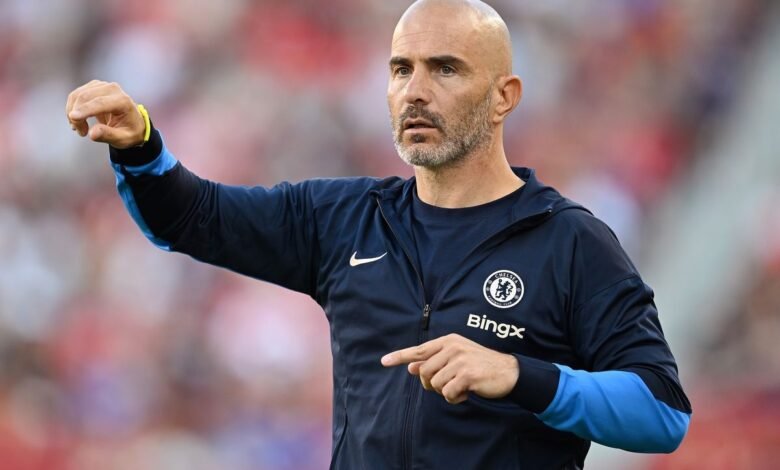
Introduction to Enzo Maresca
Enzo Maresca was born on February 10, 1980, in Pontecagnano Faiano, Italy. Growing up in a country where football is more than just a sport, Maresca developed a deep passion for the game at a very young age. Like many Italian players of his generation, he spent countless hours studying the tactical nuances of the game, which would later become a defining feature of his career.
From his early days, Maresca showed a natural understanding of positioning and game intelligence. While he may not have been the flashiest player on the pitch, Enzo Maresca his ability to read the game and dictate tempo set him apart. These qualities eventually helped him break into professional football, where he began to shape his identity as a technically gifted midfielder.
His professional journey started with West Bromwich Albion, although he struggled to make a significant impact there. However, his move back to Italy proved to be a turning point. Playing in Serie A allowed him to refine his skills and adapt to one of the most tactically demanding leagues in the world.
Maresca’s early career experiences played a crucial role in shaping his football philosophy. Exposure to different leagues, playing styles, and coaching methods helped him develop a well-rounded understanding of the game. These formative years laid the groundwork for his future transition into coaching.
Playing Career: A Journey Across Europe
Enzo Maresca enjoyed a diverse and enriching playing career that took him across several top European leagues. He is perhaps best remembered for his time at Sevilla FC, where he achieved significant success and gained widespread recognition.
During his time at Sevilla, Maresca played a pivotal role in the club’s golden era. He was instrumental in their victories in the UEFA Cup Final 2006 and the UEFA Cup Final 2007. His performance in the 2006 final was particularly memorable, as he scored twice and was named Man of the Match. That moment cemented his legacy at the club.
Apart from Sevilla, Maresca also played for notable clubs such as Juventus FC and Málaga CF. His time at Juventus helped him gain experience at the highest level of Italian football, while his stint at Málaga added further depth to his international exposure.
Throughout his playing career, Maresca was known for his composure on the ball, precise passing, and tactical discipline. While he may not have been a headline-grabbing superstar, he was a dependable and intelligent midfielder who contributed significantly to his teams’ success.
Transition into Coaching: A New Chapter
After retiring from professional football, Enzo Maresca seamlessly transitioned into coaching. His deep understanding of the game made this move almost inevitable. He began his coaching journey by working with youth teams, where he focused on developing young talent and instilling a strong tactical foundation.
One of the most significant steps in his coaching career came when he joined the staff of Manchester City FC under the guidance of Pep Guardiola. Working alongside Guardiola had a profound impact on Maresca’s coaching philosophy.
At Manchester City, Enzo Maresca was exposed to a highly sophisticated style of play that emphasized positional awareness, ball control, and fluid movement. He absorbed these principles and began to incorporate them into his own coaching approach. This experience was invaluable in shaping him into a modern, forward-thinking manager.
His time with Manchester City’s Elite Development Squad also allowed him to showcase his ability to nurture young players. Under his guidance, several promising talents flourished, further enhancing his reputation as a capable and innovative coach.
Managerial Career and Breakthrough Success
Enzo Maresca’s managerial career truly took off when he began taking on senior roles. One of his notable early appointments was with Parma Calcio 1913, although his tenure there was relatively short-lived. Despite the challenges, this experience provided him with valuable lessons about managing at the professional level.
His breakthrough moment came when he took charge of Leicester City FC. At Leicester, Enzo Maresca implemented a distinctive style of play that combined possession-based football with tactical discipline. His approach quickly transformed the team into a cohesive and competitive unit.
Maresca’s ability to adapt his tactics to different situations became one of his defining strengths. He demonstrated a keen understanding of how to exploit opponents’ weaknesses while maintaining his team’s identity. This balance between flexibility and consistency set him apart from many of his contemporaries.
Under his leadership, Leicester City showed significant improvement, both in terms of performance and results. His work did not go unnoticed, and he began to attract attention as one of the most promising young managers in European football.
Tactical Philosophy: Inspired by the Best
Enzo Maresca’s tactical philosophy is heavily influenced by his time working with Pep Guardiola. However, he has also added his own unique touch, creating a style that is both modern and adaptable.
At the core of his approach is a strong emphasis on possession. Enzo Maresca believes that controlling the ball is the key to controlling the game. His teams are known for their ability to maintain possession under pressure, patiently build attacks, and create scoring opportunities through intelligent movement.
Another important aspect of his philosophy is positional play. Players are expected to maintain specific positions on the field to create passing options and maintain structure. This approach not only improves ball circulation but also enhances defensive stability.
Maresca also places a strong emphasis on pressing. His teams are trained to win the ball back quickly after losing possession, often using coordinated pressing strategies. This high-intensity style of play can disrupt opponents and create immediate attacking opportunities.
Despite these influences, Maresca is not a rigid tactician. He is willing to adapt his strategies based on the strengths of his players and the challenges posed by opponents. This flexibility is one of the reasons why he has been able to achieve success in different environments.
Leadership Style and Player Development
One of Enzo Maresca’s standout qualities as a manager is his leadership style. He is known for his calm demeanor and clear communication, which help him build strong relationships with his players. Rather than relying on authority alone, he emphasizes mutual respect and understanding.
Maresca places a strong focus on player development. He believes that improving individual players is essential for the overall success of the team. Enzo Maresca This philosophy is evident in the way he works closely with his squad, providing personalized guidance and support.
Young players, in particular, benefit greatly from his coaching. His experience with youth teams has given him the ability to identify potential and nurture talent effectively. Many players under his guidance have shown significant improvement, both technically and tactically.
His leadership approach also fosters a positive team environment. Players are encouraged to express themselves on the pitch while adhering to the team’s tactical framework. This balance between freedom and discipline creates a cohesive and motivated squad.
Challenges and Criticism
Like any manager, Enzo Maresca has faced his share of challenges and criticism. Transitioning from a player to a manager is never easy, and the expectations at the professional level can be immense.
One of the main challenges he has encountered is adapting to the pressures of top-level management. Results are often the ultimate measure of success, and even the most promising managers can face scrutiny during difficult periods.
Critics have sometimes questioned his reliance on possession-based football, especially in situations where a more direct approach might be effective. However, Enzo Maresca has remained committed to his philosophy while also showing a willingness to adapt when necessary.
Another challenge has been managing expectations. As a young and highly regarded coach, he is often expected to deliver immediate success. Balancing long-term development with short-term results is a delicate task, but one that Maresca continues to navigate.
Conclusion:
Looking ahead, the future appears bright for Enzo Maresca. His innovative approach, combined with his strong tactical foundation, positions him as one of the most exciting managers in modern football.
As he continues to gain experience, there is a strong possibility that he will take on even bigger challenges, potentially managing top clubs in Europe. His ability to adapt and evolve will be crucial in determining how far he can go.
Maresca’s legacy is still in the making, but his impact is already evident. He represents a new generation of coaches who blend traditional football principles with modern tactical innovations. This combination has the potential to influence the game for years to come.
Ultimately, Enzo Maresca’s journey is a testament to the power of dedication, intelligence, and adaptability. From his early days as a player to his rise as a respected manager, he has consistently demonstrated a deep understanding of football. As his career continues to unfold, fans and analysts alike will be watching closely to see what he achieves next.