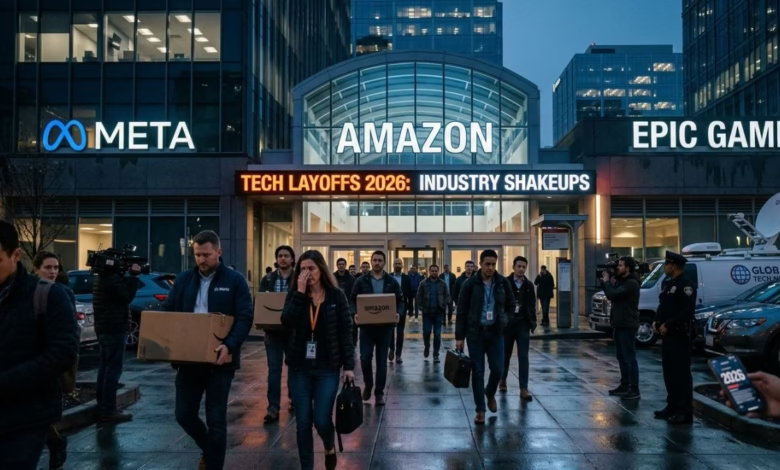
Introduction to Amazon Layoffs
The topic of Amazon Layoffs has become one of the most discussed developments in the tech and corporate world over the past few years. From rapid hiring during the pandemic to large-scale workforce reductions afterward, Amazon’s employment strategy reflects broader economic shifts, changing consumer behavior, and evolving priorities in the tech industry.
In this in-depth article, we’ll break down Amazon layoffs in a way that’s easy to understand, highly skimmable, and insightful—while maintaining an expert-level perspective. Whether you’re a job seeker, business enthusiast, or simply curious, this guide covers everything you need to know.
Understanding Amazon Layoffs: The Big Picture
Amazon layoffs didn’t happen overnight. They are part of a larger cycle that many global companies experience, especially after periods of aggressive growth.
First, during the COVID-19 pandemic, Amazon Layoffs expanded at an unprecedented rate. With millions of people shopping online, demand surged across its services—from e-commerce to cloud computing through Amazon Web Services. To keep up, the company hired hundreds of thousands of employees worldwide. Warehouses expanded, logistics networks grew, and corporate teams scaled quickly.
Second, as the world reopened, consumer behavior shifted again. People returned to physical stores, travel increased, and online shopping growth slowed. Amazon Layoffs suddenly found itself overstaffed in several departments. This imbalance created financial pressure, forcing leadership to rethink its workforce strategy.
Third, macroeconomic conditions also played a role. Rising inflation, higher interest rates, and global uncertainty pushed companies—including Amazon Layoffs—to cut costs. Layoffs became a strategic decision rather than a reactive one.
Finally, Amazon’s leadership, including CEO Andy Jassy, emphasized efficiency. The company began focusing on profitability and long-term sustainability rather than rapid expansion at any cost.
Why Amazon Conducted Layoffs
Understanding the reasons behind Amazon layoffs helps remove confusion and speculation. The decision wasn’t based on a single factor—it was a combination of strategic and economic pressures.
To start, over-hiring during the pandemic created structural inefficiencies. Many teams grew faster than needed, and some roles became redundant once demand stabilized. Amazon had to rebalance its workforce to align with current business needs.
Another key reason was cost optimization. Like many tech giants, Amazon Layoffs began trimming expenses to protect margins. Corporate roles, experimental projects, and underperforming divisions were often the first to face cuts.
Additionally, shifting priorities played a major role. Amazon started reallocating resources toward high-growth areas like artificial intelligence, cloud services, and automation. This meant reducing investment in less critical or slower-growing segments.
Technology itself also contributed. Automation and machine learning have reduced the need for certain operational roles. As Amazon improves efficiency through technology, it naturally requires fewer employees in some areas.
Lastly, investor expectations cannot be ignored. Amazon Layoffs As a publicly traded company (AMZN), Amazon must demonstrate financial discipline. Layoffs are sometimes used to reassure investors about cost control and future profitability.
Departments and Roles Affected by Layoffs
Amazon layoffs did not impact all employees equally. Certain departments experienced more significant cuts than others.
Corporate roles were among the most affected. Teams in HR, recruiting, marketing, and product management saw reductions as Amazon streamlined operations. Many of these roles had expanded rapidly during the hiring boom and were later scaled back.
Technology teams also faced layoffs, although more selectively. Some engineering roles tied to experimental or non-core projects were eliminated. However, Amazon continued hiring in critical areas like cloud computing, AI, and cybersecurity.
Retail and e-commerce divisions experienced restructuring as well. With slower growth in online shopping, Amazon reduced staff in certain product categories and support roles.
Devices and services teams—including those working on products like Alexa—also saw layoffs. Amazon reassessed its investment in hardware and voice technology, prioritizing profitability over expansion.
Finally, recruiting teams were heavily impacted. Since hiring slowed significantly, the need for large recruitment departments decreased, leading to widespread job cuts in this area.
Impact on Employees and Workplace Culture
Layoffs don’t just affect numbers—they deeply impact people and company culture.
For employees, layoffs bring uncertainty and stress. Many workers who joined Amazon during its growth phase suddenly found themselves without jobs. Even those who remained experienced anxiety about future job security.
Morale within the company also took a hit. When layoffs occur, remaining employees often feel increased pressure and reduced confidence in leadership decisions. This can affect productivity and engagement.
However, Amazon attempted to soften the impact by offering severance packages, career transition support, and job placement assistance. While helpful, these measures cannot fully offset the emotional and financial toll of job loss.
Workplace culture also shifted toward efficiency and accountability. Teams became leaner, and expectations increased. Employees now operate in a more performance-driven environment where results matter more than ever.
At the same time, some argue that layoffs helped remove bureaucracy and improved decision-making speed. Leaner teams can sometimes lead to better innovation and execution.
How Amazon Layoffs Compare to Other Tech Companies
Amazon is not alone in conducting layoffs. The entire tech industry has gone through a similar phase.
Companies like Meta Platforms, Google, and Microsoft also announced significant layoffs in recent years. These companies faced similar challenges—over-hiring during the pandemic and slowing growth afterward.
However, Amazon’s layoffs stood out due to their scale and timing. As one of the largest employers globally, even small percentage cuts translate into tens of thousands of jobs.
Another difference lies in Amazon’s business model. Unlike many tech firms, Amazon operates across multiple industries—e-commerce, cloud computing, logistics, and entertainment. This diversity means layoffs are often more complex and spread across various sectors.
Despite these differences, the underlying trend is the same: tech companies are shifting from growth-focused strategies to efficiency-driven models.
The Role of Automation and AI in Layoffs
Automation and artificial intelligence are reshaping the workforce, and Amazon is at the forefront of this transformation.
Amazon has heavily invested in warehouse robotics and AI-driven systems. These technologies improve efficiency, reduce costs, and speed up operations. However, they also reduce the need for manual labor in certain areas.
In corporate settings, AI tools are automating tasks like data analysis, customer service, and even content generation. This shift changes the types of roles companies need, favoring technical and specialized skills over routine tasks.
That said, automation doesn’t only eliminate jobs—it also creates new ones. Amazon continues to hire engineers, data scientists, and AI specialists to build and maintain these systems.
The challenge for workers lies in adapting. Upskilling and reskilling have become essential in a world where technology evolves rapidly.
What Amazon Layoffs Mean for Job Seekers
If you’re a job seeker, Amazon layoffs may seem discouraging—but they also provide valuable insights.
First, the job market is becoming more competitive. With experienced professionals entering the workforce, candidates need stronger skills and better preparation to stand out.
Second, in-demand skills are changing. Technical expertise, data analysis, cloud computing, and AI-related skills are more valuable than ever. Understanding platforms like AWS can significantly boost your employability.
Third, flexibility is key. Job seekers should be open to different roles, industries, and even remote opportunities. The traditional career path is evolving, and adaptability is a major advantage.
Networking also plays a crucial role. Many opportunities come through connections rather than job postings. Building relationships within your industry can open doors that might otherwise remain closed.
Finally, continuous learning is essential. The more you invest in your skills, the better prepared you’ll be for future opportunities—even in a volatile job market.
The Future of Amazon’s Workforce Strategy
Looking ahead, Amazon’s workforce strategy will likely focus on efficiency, innovation, and long-term growth.
The company is expected to continue investing in high-growth areas like cloud computing, artificial intelligence, and logistics technology. These sectors offer strong revenue potential and align with global trends.
At the same time, Amazon will likely maintain a cautious approach to hiring. Instead of rapid expansion, the company may prioritize strategic hiring—bringing in talent only where it adds significant value.
Automation will continue to play a major role. As technology advances, Amazon Layoffs will further optimize its operations, potentially reducing the need for certain roles while creating new opportunities in others.
Leadership decisions will also shape the future. Under Andy Jassy, Amazon is focusing more on profitability and operational discipline, signaling a shift from its earlier growth-first mindset.
Ultimately, Amazon’s workforce will become more specialized, more efficient, and more aligned with its long-term goals.
Conclusion:
Amazon layoffs may sound alarming, but they represent a strategic shift rather than a sign of failure.
The company is adapting to changing market conditions, technological advancements, and economic realities. While layoffs are difficult and often painful, they are sometimes necessary for long-term sustainability.
For employees, the key takeaway is adaptability. For businesses, it’s about balance—growing responsibly while maintaining efficiency. And for job seekers, it’s an opportunity to align skills with future demand.
In the end, Amazon remains one of the most influential companies in the world. Its decisions don’t just affect its own workforce—they shape the entire tech industry.
Understanding these layoffs isn’t just about Amazon—it’s about understanding the future of work itself.