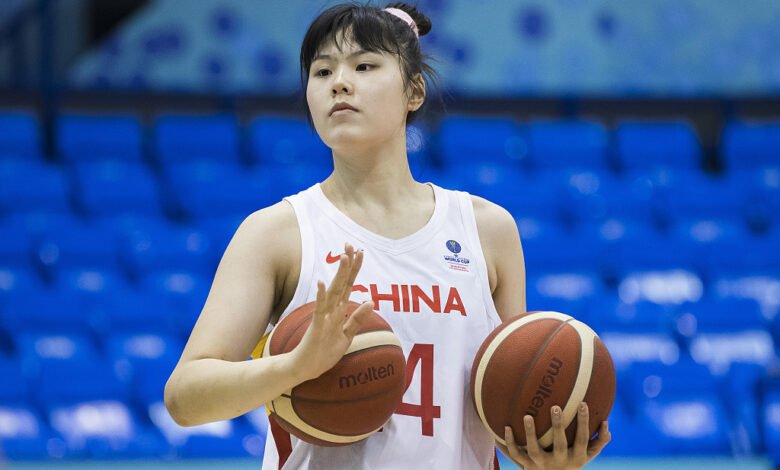
Introduction to Li Yueru
When you talk about dominant centers in modern women’s basketball, one name that steadily earns attention is Li Yueru. With her commanding presence in the paint, impressive international résumé, and evolving role in global leagues, Li has become a symbol of how the game is expanding beyond traditional boundaries.
This article takes a deep, skimmable dive into her journey, skills, challenges, and impact—written in a way that’s easy to follow but grounded in expert-level insight.
Early Life and Basketball Beginnings
Li Yueru was born in China, a country with a growing passion for basketball, especially after the global success of players like Yao Ming. From a young age, Li stood out physically. Her height and natural coordination made her a perfect candidate for the sport, but raw talent alone never guarantees success.
She began formal training in structured youth programs, which are a cornerstone of China’s sports development system. These programs focus heavily on discipline, repetition, and fundamentals. Unlike many Western players who grow up in more fluid systems, Li Yueru’s early years were defined by rigorous coaching and a strong emphasis on technique.
During her teenage years, Li Yueru quickly climbed the ranks in national youth competitions. Coaches noticed her ability to dominate the paint, both offensively and defensively. Her footwork, which is often overlooked in young players, developed early, giving her an advantage over peers who relied solely on size.
By the time she entered professional pathways, Li Yueru wasn’t just a tall player—she was a polished center with a clear understanding of positioning, timing, and team play. This foundation would later become one of her greatest strengths.
Professional Career in China
Li Yueru made her mark in the Women’s Chinese Basketball Association (WCBA), where she played for powerhouse teams like the Guangdong Dolphins. The WCBA is highly competitive, often featuring a mix of domestic stars and international talent, which helped accelerate her development.
From her early seasons, Li Yueru established herself as a dominant interior presence. She consistently delivered strong performances in scoring, rebounding, and shot-blocking. Her ability to control the pace inside the paint made her a central figure in her team’s strategy.
One of her standout qualities in the WCBA has been her efficiency. Unlike players who rely on volume shooting, Li focuses on high-percentage opportunities. She uses her size to seal defenders, finishes strong around the rim, and rarely forces low-quality shots.
Her contributions helped her teams reach playoff stages and compete for championships. More importantly, she became one of the faces of the league, representing the new generation of Chinese women’s basketball talent.
As her reputation grew, it became clear that Li’s potential extended far beyond domestic competition.
International Career and Global Recognition
Li Yueru’s impact is not limited to club basketball. She has been a key player for the Chinese national team, competing in major tournaments such as the FIBA Women’s World Cup and the Olympics.
One of the defining moments of her international career came during China’s strong performances on the global stage, where she played a crucial role in the team’s interior dominance. Her presence in the paint allowed guards to play more freely, knowing they had a reliable anchor inside.
Playing internationally also exposed Li to different styles of basketball. Teams from Europe and the United States often emphasize speed, spacing, and perimeter shooting. Adjusting to these styles required her to improve her mobility and defensive versatility.
Despite these challenges, Li proved she could compete with the best. She held her own against elite centers and showed that her skill set translates well across different basketball systems.
Her international success has helped elevate the profile of Chinese women’s basketball, inspiring younger players to pursue the sport at a higher level.
Transition to the WNBA
Li Yueru’s move to the WNBA marked a significant milestone in her career. Joining a league widely regarded as the pinnacle of women’s professional basketball presented both opportunities and challenges.
She became part of the Chicago Sky, a team known for its competitive culture and championship ambitions. Playing in the WNBA required Li to adapt quickly to a faster pace and a more physical style of play.
Unlike the WCBA, where she often dominated, the WNBA features elite athletes at every position. This meant Li had to adjust her game, focusing more on quick decision-making and defensive rotations.
Her time in the league has been a learning experience. While she may not always be the primary scoring option, her role as a rebounder, screen-setter, and interior defender remains crucial.
The exposure to the WNBA has also contributed to her overall growth. Competing against top-tier players pushes her to refine her skills and expand her game.
Playing Style and Strengths
Li Yueru’s playing style revolves around her dominance in the paint, but there’s more nuance to her game than meets the eye.
First, her footwork stands out. She uses subtle movements to create space, allowing her to get high-percentage shots near the basket. This skill is particularly valuable against defenders who rely on strength alone.
Second, her rebounding ability is elite. She reads the trajectory of the ball exceptionally well and positions herself effectively. This makes her a consistent double-digit rebound threat in many games.
Third, her defensive presence cannot be ignored. She alters shots simply by being in the vicinity. Opponents often hesitate to attack the rim when she’s on the court, which significantly impacts the flow of the game.
Additionally, Li has shown improvement in passing out of double teams. As defenses collapse on her, she has learned to find open teammates, making her a more complete offensive player.
Her strengths make her a classic center, but her ongoing development hints at a more modern, versatile role in the future.
Challenges and Areas of Growth
Like any athlete transitioning to the global stage, Li Yueru faces challenges that require constant adjustment.
One of the main areas is mobility. The modern game demands centers who can switch defensively and keep up with faster players. While Li has improved in this area, it remains a focus for her development.
Another challenge is consistency in international leagues. Differences in play style, travel schedules, and competition levels can affect performance. Maintaining a steady level of play across all environments is not easy.
Offensively, expanding her shooting range could elevate her game. While she excels near the basket, adding a reliable mid-range or even three-point shot would make her even more difficult to defend.
Despite these challenges, Li’s work ethic and structured training background suggest that she is well-equipped to continue improving.
Impact on Chinese Basketball
Li Yueru represents more than just individual success—she symbolizes the growth of women’s basketball in China.
Her achievements inspire young athletes to pursue the sport seriously. Seeing a player compete in leagues like the WNBA shows that international opportunities are within reach.
She also contributes to the global perception of Chinese players. Historically, Asian athletes have been stereotyped in certain ways, but players like Li challenge those assumptions by showcasing strength, skill, and competitiveness.
Her presence in international competitions strengthens China’s reputation as a powerhouse in women’s basketball. This, in turn, attracts more attention, investment, and development opportunities for the sport.
In many ways, Li serves as a bridge between Chinese basketball and the global stage.
Leadership and Team Dynamics
Beyond her physical abilities, Li Yueru plays an important role in team dynamics. Her calm demeanor and disciplined approach make her a reliable presence on and off the court.
Teammates often look to her for stability, especially in high-pressure situations. She doesn’t need to dominate the ball to influence the game. Instead, she contributes through positioning, communication, and consistent effort.
Her experience in international competitions also adds value. She understands different playing styles and can adapt strategies accordingly, which benefits her teams during critical moments.
Leadership doesn’t always come from vocal intensity. In Li’s case, it comes from reliability and professionalism—qualities that every successful team needs.
Future Outlook
Looking ahead, Li Yueru’s career trajectory remains promising. As she continues to gain experience in international leagues, her game is likely to become more refined and versatile.
If she develops a broader offensive skill set, she could become one of the most complete centers in women’s basketball. Her foundation is already strong; it’s now about adding layers to her game.
There’s also potential for her to take on a bigger leadership role, both in club teams and the national squad. With experience comes influence, and Li is well-positioned to guide the next generation.
From a global perspective, her continued presence in leagues like the WNBA will help strengthen the connection between different basketball cultures.
Conclusion
Li Yueru’s journey is a testament to what disciplined training, natural talent, and adaptability can achieve. From her early days in China to competing on the world stage, she has consistently proven her value as a top-tier center.
Her story is still unfolding, but one thing is clear: she is not just a player to watch—she is a player shaping the future of women’s basketball.
As the sport continues to grow globally, athletes like Li will play a crucial role in defining its direction. Whether dominating in the paint, representing her country, or evolving her game, she embodies the modern era of basketball excellence.